
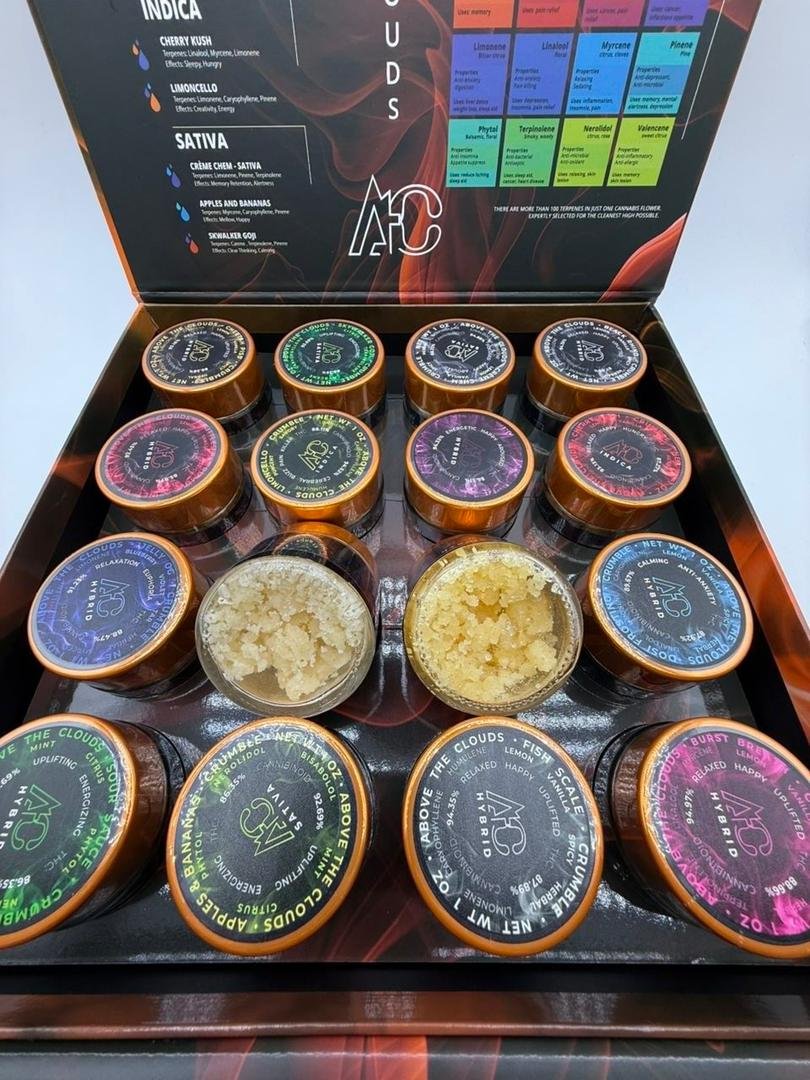
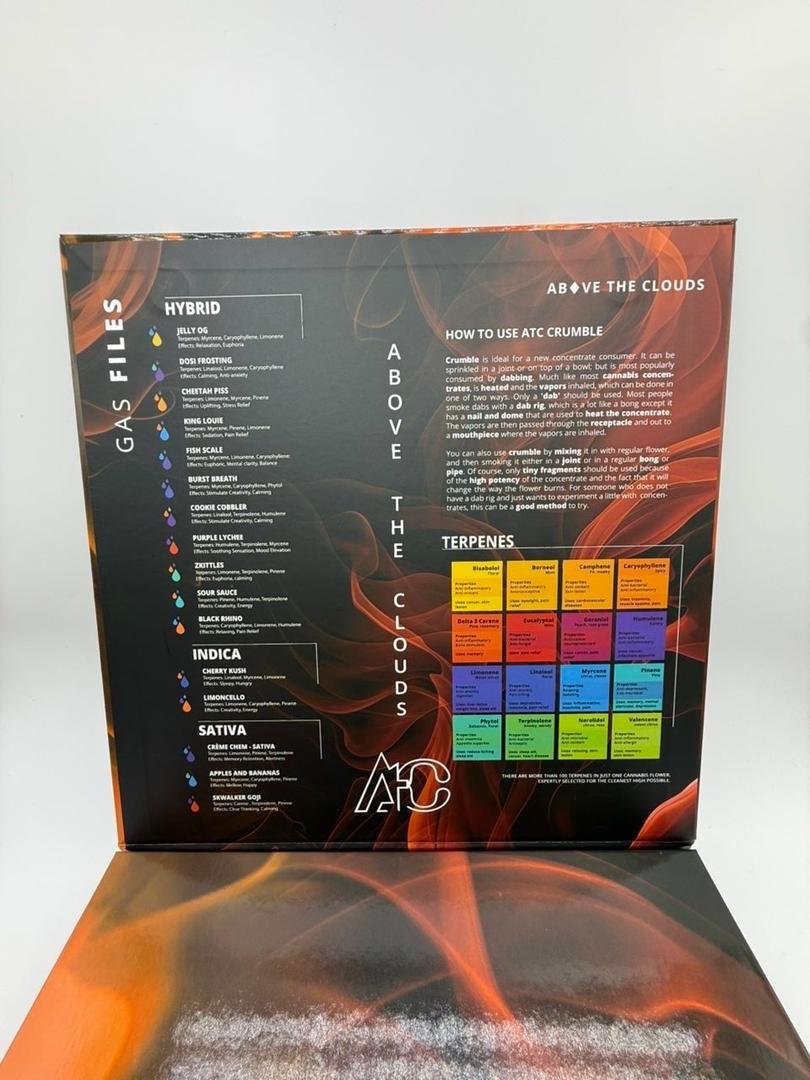
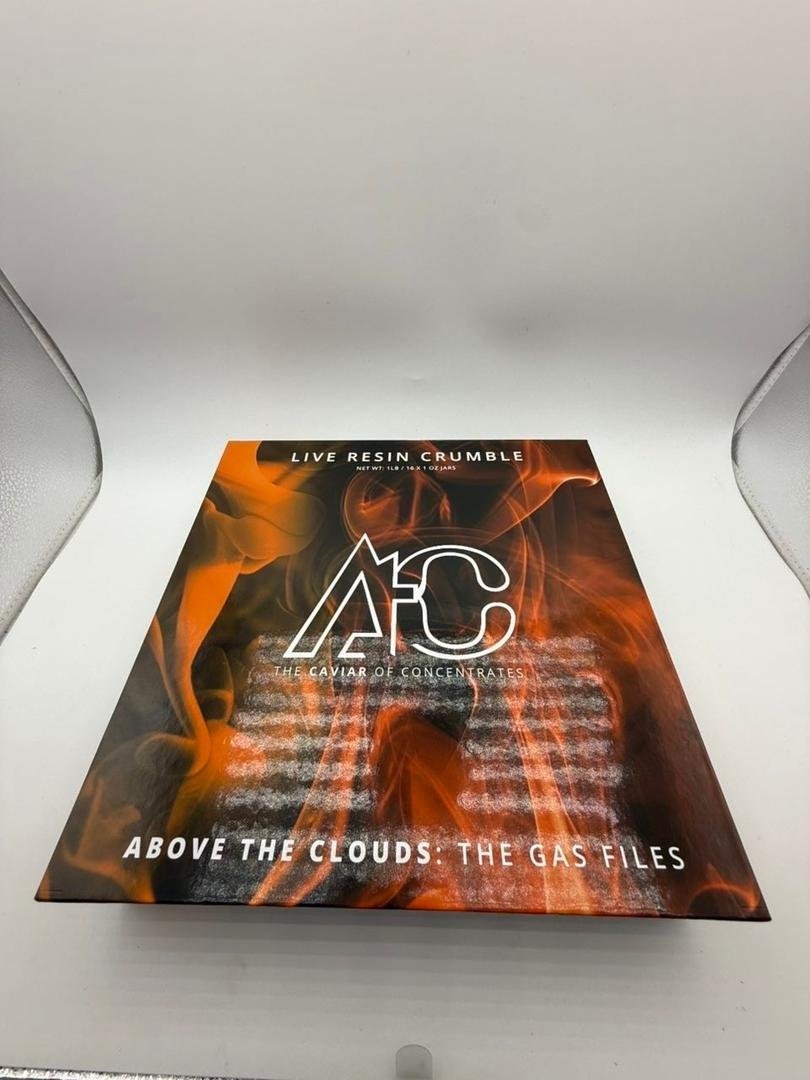



ATC LIVE RESIN THE CAVIAR OF CONCENTRATES

Price range: $140.00 through $1,150.00
ATC Live Resin is produced through a scientifically controlled extraction workflow centered around fresh-frozen input material, engineered solvent cycling, and low-temperature processing protocols that preserve native aromatic compounds while maintaining structural integrity.
ATC Live Resin — Comprehensive Technical Analysis of Fresh-Frozen Extraction, Resin Matrix Formation, and High-Precision Concentrate Engineering
ATC Live Resin manufacturing begins with fresh-frozen biomass stabilization, which represents the foundational stage in the preservation of native terpene structures and resinous compounds. The rapid transition from harvest to cryogenic storage ensures that biological degradation processes remain suppressed. Because enzymatic activity accelerates immediately after harvest, plant tissues require immediate intervention. This is why the biomass undergoes a scientifically controlled freezing protocol that maintains structural, biochemical, and thermal integrity atc live resin crumble.
1.1 Harvest-Stage Material Selection and Pre-Freeze Evaluation
The pre-freeze workflow begins in the cultivation environment. Technicians evaluate biomass using a multi-parameter inspection protocol that includes:
-
Moisture-content uniformity
-
Trichome density and maturation assessment
-
Surface integrity evaluation
-
Foreign-material exclusion
These initial assessments dictate whether biomass qualifies for fresh-frozen processing. Material exhibiting mechanical damage, microbial irregularities, or environmental contamination is diverted from the live-resin workflow.
Additionally, technicians measure water activity (Aw), which influences ice-crystal formation during freezing. Lower water activity reduces intracellular ice formation, stabilizing terpene content during cryogenic storage.
1.2 Cryogenic Freeze-Locking and Ice-Crystal Regulation
Once the biomass passes inspection, it undergoes flash-freezing, typically using temperatures ranging from –20°C to –40°C. The process relies on controlled thermal descent, where freezing occurs so quickly that ice crystals remain small and evenly dispersed. Smaller crystals maintain cellular architecture, whereas large crystals disrupt plant tissues and accelerate terpene evaporation.
To achieve proper freeze-locking:
-
Cryogenic blowers circulate sub-zero air at high velocity.
-
Perforated stainless-steel trays allow multi-axis airflow penetration.
-
Thermocouples measure temperature gradients across the biomass.
-
Humidity-control modules reduce frost accumulation.
Because freeze uniformity is essential, technicians rotate trays at calculated intervals, ensuring thermal equilibrium throughout the chamber.
1.3 Cold-Chain Transfer and Thermal-Drift Prevention
After freezing, the biomass enters the cold-chain logistics phase, where maintaining sub-zero stability becomes crucial. The material is placed into insulated, temperature-regulated containers. Additionally, integrated digital sensors track:
-
Internal bin temperature
-
Humidity levels
-
Thermal drift patterns
-
Duration of cold exposure
If the biomass surpasses designated thresholds, corrective measures activate, preventing thaw cycles that would compromise terpene integrity.
Moreover, because transport vibration can disturb frozen trichomes, containers incorporate vibration-dampening foam layers and reinforced structural siding. These enhancements maintain material stability during physical movement between freezing, staging, and extraction areas.
1.4 Cryogenic Staging and Pre-Extraction Conditioning
Before extraction, frozen biomass enters an ultra-low-temperature staging vault, which maintains environmental conditions necessary for preventing thaw initiation. This vault uses:
-
Nitrogen-cooled refrigeration coils
-
High-density insulation panels
-
Laminar-flow air distribution
-
Redundant cooling circuits
Biomass remains in this environment until extraction columns reach the required temperature. Extraction hardware must match biomass temperature to avoid thermal shock, which may cause inconsistent solvent absorption.
1.5 Low-Temperature Weighing and Column Prep
Next, technicians weigh biomass using sub-zero calibrated load cells. Maintaining frozen conditions during measurement ensures that:
-
Moisture content does not change
-
Ice crystals do not melt
-
Material density remains consistent
Moreover, the weighing stations operate inside climate-controlled rooms with humidity-reduction systems, which prevent frost accumulation that could interfere with accurate measurement.
Once weighed, the biomass is packed into pre-chilled stainless-steel extraction columns. Each column features:
-
Cryogenic-grade steel
-
Reinforced pressure housings
-
Precision-vent screens
-
Heat-insulated external jackets
The packing procedure focuses on column density uniformity. If biomass is compressed unevenly, solvent channeling may occur, causing incomplete extraction. Therefore, technicians use:
-
Low-temperature tamping tools
-
Material-distribution grids
-
Compression-load sensors
These instruments ensure consistent packing pressure throughout the column.
1.6 Solvent-Compatibility Modeling and Preparatory Calibration
Before extraction begins, the solvent system must be calibrated. Solvent behavior changes drastically at sub-zero temperatures; therefore, viscosity, density, and flow resistance must be modeled accurately. Engineers rely on:
-
Reynolds number calculations
-
Viscosity-temperature curves
-
Solvent-specific heat-transfer coefficients
-
Pressure-drop simulations
Additionally, technicians confirm that extraction lines remain insulated so solvent temperatures do not rise during transit.
1.7 Structural Preservation Outcomes and Cryogenic Performance Metrics
Proper cryogenic handling produces measurable improvements in resin quality. Metric evaluation includes:
-
Terpene retention percentage
-
Moisture-migration analysis
-
Trichome structural integrity mapping
-
Ice-crystal uniformity scans

These metrics confirm whether biomass meets the structural and biochemical requirements necessary for high-fidelity live resin production.
Because every downstream stage depends on frozen-material quality, cryogenic preservation remains the most critical variable in determining final resin stability. Thus, the fresh-frozen process forms the foundational layer upon which the entire ATC Live Resin extraction workflow is built.
Solvent-Phase Engineering, Closed-Loop Extraction Thermodynamics, and Resin Separation Mechanics
The extraction stage of ATC Live Resin production operates within a closed-loop hydrocarbon system engineered to maintain low-temperature conditions while controlling thermodynamic behavior across multiple phases of solvent interaction. Because live resin depends on the preservation of volatile compounds, the extraction system must regulate pressure, temperature, solvent viscosity, and flow velocity simultaneously. Consequently, the architecture of the closed-loop platform is designed to minimize thermal drift, prevent structural degradation of resin molecules, and maximize constituent integrity throughout solvent cycling.
2.1 Closed-Loop Extraction System Configuration
A modern closed-loop extractor consists of several interconnected modules, each responsible for a specific thermodynamic function. The core components include:
-
Cryogenic solvent storage vessels
-
Stainless-steel extraction columns
-
Primary and secondary collection vessels
-
Hydrocarbon recovery units
-
Condensation coils and heat exchangers
-
Vacuum pumps and pressure regulators
These modules form a continuous circuit that recycles solvent after it dissolves resinous compounds from plant material.
The system’s piping network uses 316L stainless steel, chosen for its corrosion resistance, tensile strength, and solvent compatibility. Furthermore, all seals consist of fluoropolymer gaskets engineered to maintain elasticity at low temperatures.
2.2 Thermodynamic Control of Solvent Temperature
Because live resin extraction relies on ultra-low temperatures, solvents—typically butane, propane, or blends thereof—require precise thermal conditioning. Cryogenic refrigeration units cool the solvent to temperatures between –20°C and –50°C, depending on system specifications.
Key Temperature-Control Mechanisms Include:
-
Glycol-circulated cooling jackets around solvent tanks
-
Cryogenic-grade insulation along transfer lines
-
Real-time thermal sensors monitoring solvent temperature at multiple nodes
-
PID (Proportional-Integral-Derivative) control loops regulating refrigeration output
The PID system continuously adjusts cooling intensity to compensate for heat introduced by environmental fluctuations, pump resistance, or friction along the transfer lines.
If the temperature rises beyond acceptable thresholds, terpene volatility increases, altering the final resin profile. For this reason, technicians monitor temperature drift closely and perform corrective adjustments immediately atc live resin concentrate.
2.3 Solvent Viscosity Behavior and Flow Dynamics
At cryogenic temperatures, hydrocarbon solvents exhibit altered viscosity profiles, affecting flow rate and extraction efficiency. Engineers model these characteristics using:
-
Arrhenius viscosity equations
-
Pressure-temperature phase diagrams
-
Flow-resistance simulations
Because low viscosity improves penetration into frozen biomass, maintaining target temperature ranges ensures that the solvent traverses the plant matrix uniformly.
Moreover, viscosity influences the Reynolds number, which determines laminar or turbulent flow. Laminar flow is preferable in this application because it reduces mechanical disturbance and promotes even extraction of resin and volatile compounds.
2.4 Extraction Column Engineering and Cryogenic Mass Transfer
The frozen biomass, previously packed into cryogenic-grade stainless-steel columns, encounters solvent during the mass transfer phase. When chilled solvent enters the column, thermal gradients between solvent and biomass remain minimal, preventing vaporization.
Column Engineering Features Include:
-
Perforated internal diffusion plates
-
Cryogenic manifold distribution heads
-
Pressure-equalization bypass channels
-
Thick-walled steel bodies capable of withstanding significant pressure variations
Solvent enters from the top and moves downward, interacting with the frozen biomass. The mass transfer process dissolves resin compounds while leaving undesirable plant waxes and lipids largely intact, due to reduced solubility at low temperatures.
Because the biomass remains frozen, cell walls maintain structural rigidity. This reduces chlorophyll leaching and improves resin selectivity.
2.5 Solvent Saturation Behavior and Resin Dissolution Kinetics
Once solvent saturates the biomass, resin molecules dissolve through a diffusion-limited reaction mechanism. The dissolution rate depends on several variables:
-
Solvent polarity
-
Temperature differential
-
Surface-area exposure of trichomes
-
Mass-transfer efficiency
-
Pressure-driven solvent movement
Because frozen trichomes fracture easily under solvent pressure, surface-area exposure increases, enhancing extraction yield.
Furthermore, resin dissolution exhibits first-order kinetic behavior, meaning the rate correlates directly with the concentration of dissolved compounds. Engineers calibrate flow rate to balance dissolution efficiency and solvent purity atc live resin crumble.
If flow rate becomes too rapid, resin saturation declines, reducing yield. Conversely, excessively slow flow promotes unnecessary extraction duration, introducing thermal risk. Therefore, pumps maintain an optimized flow rate monitored via pressure transducers atc live resin crumble.
2.6 Collection Vessel and Hydrocarbon Mixture Stabilization
After dissolving resin from plant tissue, the solvent-resin mixture exits the extraction column and enters a primary collection vessel. This vessel is engineered for thermal and mechanical stability, including:
-
Double-walled steel construction
-
Integrated heating elements
-
Pressure-rated viewing portals
-
Vacuum-sealing gaskets
The mixture settles in the vessel at low temperature. Then, technicians initiate a controlled heating phase to vaporize hydrocarbon solvent while keeping resin composition intact atc live resin crumble.
Because heating must occur gradually, the vessel uses:
-
Low-output mantle heaters
-
Thermocouple arrays
-
Insulated steel jackets
-
PID thermal regulation
Through these mechanisms, solvent evaporates without exceeding the resin’s thermal threshold atc live resin crumble.
2.7 Hydrocarbon Recovery and Solvent Recondensation
The evaporated solvent vapor passes into a heat-exchanger coil or condenser, where temperature drops sufficiently to convert vapor back into liquid. After condensation, the solvent flows into the storage reservoir for reuse.
The Recovery Cycle Includes:
-
Vacuum induction to reduce solvent boiling point
-
Controlled heating in the collection vessel
-
Refrigerated condensation in cooling coils
-
Filtration stages that remove impurities
Furthermore, the condenser operates at sub-zero temperatures to ensure efficient solvent capture, reducing cycle time and increasing system efficiency atc live resin crumble.
Because closed-loop operation reduces solvent loss, environmental exposure remains minimal.
2.8 Resin Consistency Formation and Early Phase Structural Behavior
Once the majority of the solvent is removed, resin remains inside the collection vessel. At this stage, resin exhibits a semi-fluid, high-viscosity matrix. This phase is critical because microstructural organization begins here atc live resin crumble.
Early structural behaviors include:
-
Terpene-molecule distribution patterns
-
Initial crystallization nucleation
-
Viscosity-driven phase separation
-
Surface-tension stabilization
Resin behavior depends on precise thermal history, solvent removal rate, and residual moisture content.
If solvent removal is too rapid, resin may experience micro-bubbling, which introduces structural voids. If removal is too slow, terpene volatilization risk increases atc live resin crumble.
Thus, the temperature-pressure matrix is tightly controlled atc live resin crumble.
2.9 End-of-Extraction Quality Metrics
To ensure consistency, technicians analyze the resin after solvent removal using quantifiable metrics:
-
Residual solvent percentage (measured via gas chromatography)
-
Terpene retention index
-
Microstructural uniformity (microscopy)
-
Colorimetry-based visual parameters
-
Viscosity measurement under shear stress
These metrics confirm whether the resin meets the technical requirements to proceed to the purging phase.
Because extraction serves as the transition between raw biomass and final resin structure, every variable—from solvent temperature to column pressure—directly influences the outcome. Consequently, the extraction stage remains the most technically complex portion of the live resin manufacturing workflow atc live resin crumble.
Vacuum Purging Thermodynamics, Crystallization Kinetics, and Resin-Matrix Structural Evolution
Once the solvent-extraction cycle concludes, the semi-fluid resin enters the phase where its internal structure begins to solidify. This transitional stage relies on the precisely engineered vacuum-purge process, which controls solvent off-gassing, terpene retention, internal pressure reduction, and crystallization behavior. The resulting matrix—dense, stable, and structurally cohesive—is what eventually defines the engineering characteristics of ATC Live Resin.
Because the purge phase governs both molecular organization and structural evolution, its thermodynamic environment must maintain exact thresholds for temperature, vacuum depth, pressure variance, and thermal exposure duration.
3.1 Vacuum Oven Engineering and Thermodynamic Control
The vacuum purge process utilizes industrial vacuum ovens, which feature thermally insulated chambers, high-capacity vacuum pumps, and precision heating elements. Each oven integrates:
-
Triple-layer thermal insulation panels
-
Even-distribution heating plates
-
Thermocouple arrays for real-time heat mapping
-
Variable-speed vacuum pumps
-
Heat-resistant stainless-steel racks
Additionally, the oven maintains isothermal uniformity, preventing hot or cold zones that would disrupt crystallization behavior atc live resin crumble.
The purge cycle begins by placing the resin in shallow, food-grade stainless-steel trays designed for maximum surface exposure. Increasing surface area accelerates solvent off-gassing and reduces thermal gradients atc live resin crumble.
3.2 Vacuum Induction and Pressure Differential Control
Once trays are inside the oven, the system initiates the vacuum induction phase. Unlike atmospheric evaporation, vacuum induction reduces the boiling point of residual solvents, allowing off-gassing to occur at significantly lower temperatures. This is crucial because resin must retain its native volatile terpene fraction, which is highly sensitive to heat atc live resin crumble.
The vacuum system utilizes:
-
Rotary vane pumps for rapid pressure reduction
-
Diffusion pumps for deep-vacuum capability
-
Pressure regulators for micro-adjustments
-
Digital manometers to track pressure over time
Additionally, pressure decreases gradually to prevent excessive bubbling or structural rupture within the resin matrix atc live resin crumble.
3.3 Heat-Transfer Dynamics and Controlled Thermal Exposure
Temperature plays a critical role during purging. If heat rises too quickly, terpene evaporation may accelerate. Alternatively atc wax, if temperature remains too low, solvent removal becomes inefficient. Therefore, ovens operate within a narrow thermal band typically ranging from 25°C to 40°C, depending on the formulation atc live resin crumble.
Thermal control mechanisms include:
-
PID-regulated heating coils
-
Distributed plate heating with ±1°C accuracy
-
Thermal-lag compensation algorithms
-
Adaptive heating cycles that respond to pressure changes
These systems prevent thermal overshoot and ensure resin undergoes a stable transformation atc live resin crumble.
3.4 Solvent Off-Gassing Behavior and Molecular Escape Dynamics
During vacuum exposure, residual hydrocarbons transition from liquid to vapor through phase-change kinetics driven by reduced pressure. As solvent molecules escape, they create micro-channels within the resin’s semi-solid structure. These micro-channels help ventilate trapped solvent pockets atc live resin crumble.
The molecular escape rate depends on:
-
Vacuum depth
-
Resin viscosity
-
Surface-area exposure
-
Temperature uniformity
-
Internal molecular spacing
Because live resin maintains a relatively fluid consistency early in the purge, solvent molecules diffuse outward more efficiently than in higher-density concentrates atc live resin crumble.
Furthermore, technicians monitor bubble formation, which indicates internal solvent activity. Over time, bubbles reduce in size and frequency as the resin approaches its terminal purge state atc live resin crumble.
3.5 Crystallization Initiation and Nucleation Dynamics
As solvent content decreases and temperature stabilizes, resin undergoes crystallization nucleation, the initial step in the formation of its structural matrix atc live resin crumble.
Crystallization is influenced by:
-
Molecular saturation levels
-
Cooling profile
-
Terpene-to-resin ratio
-
Pressure consistency
-
Molecular mobility under low heat
Crystalline structures begin forming nanoscopic nucleation points—microscopic “seeds” that act as foundations for larger crystal lattices. Because live resin is rich in volatile compounds, crystallization progresses more slowly than in other concentrates; however, this slower process contributes to its uniform final structure.
3.6 Matrix Solidification, Structural Bridging, and Polymerization Patterns
After nucleation, the resin transitions into a semi-solid matrix, where lattice structures expand. This phase involves polymerization-like behavior, although not polymerization in the synthetic chemical sense. Instead, resin molecules form interconnected structural bridges.
Structural-growth behaviors include:
-
Crystalline cluster formation
-
Terpene suspension within microcavities
-
Surface-tension-driven flattening
-
Matrix densification under vacuum
These processes gradually transform the resin from a viscous fluid into a dense, stable material.
Additionally atc live resin crumble, resin thickening influences thermal distribution. As density increases, heat conductivity decreases, requiring precise oven calibration to maintain consistency atc live resin crumble.
3.7 Terpene Distribution, Volatility Control, and Aroma-Compound Preservation
Volatile compounds—especially monoterpenes—evaporate rapidly at elevated temperatures. Therefore, terpene preservation depends on the balance between:
-
Vacuum depth
-
Thermal exposure time
-
Heat-transfer efficiency
-
Resin viscosity
During purging, terpene molecules remain suspended within resin cavities. Because the vacuum process lowers solvent boiling points without proportionally increasing terpene volatility atc live resin crumble, the risk of terpene loss decreases significantly atc live resin crumble.
To maintain this balance, technicians regulate atc live resin crumble wax:
-
Pressure-drop timing
-
Temperature ramping rate
-
Cycle duration
-
Heat plate activation patterns
Additionally, terpene retention is measured using gas chromatography–mass spectrometry (GC-MS), confirming that aroma compounds remain intact atc live resin crumble.
3.8 Late-Stage Purging and Residual Solvent Elimination
As resin transitions into a more solid state, off-gassing efficiency slows due to increased viscosity. Consequently, ovens shift into a late-stage purge cycle atc live resin crumble, which uses deeper vacuum levels and slightly elevated temperatures to remove persistent solvent traces atc live resin crumble.
During this phase, technicians monitor:
-
Solvent ppm levels
-
Bubble activity
-
Thermal zone stability
-
Pressure waveform behavior
Residual solvent thresholds must meet regulatory and technical standards before resin can proceed to post-processing atc live resin crumble.
3.9 Final Structural Stabilization and Cooling Curve Regulation
After the purge cycle ends, the resin undergoes controlled cooling, which finalizes its structural matrix. Rapid cooling may cause internal cracking or surface contraction, while slow cooling promotes uniform matrix strength atc live resin crumble.
Therefore, cooling protocols involve:
-
Gradual thermal descent curves
-
Low-humidity cooling chambers
-
Heat-sink platforms
-
Continuous temperature monitoring
Once stabilized, the resin maintains atc live resin crumble:
-
Crystalline uniformity
-
Dense consistency
-
Minimal residual solvent content
-
Structural integrity suitable for storage
This final stage completes the thermodynamic transformation from raw extract to fully stabilized ATC Live Resin atc live resin crumble.
Be the first to review “ATC LIVE RESIN THE CAVIAR OF CONCENTRATES”
Related products



Reviews
There are no reviews yet.