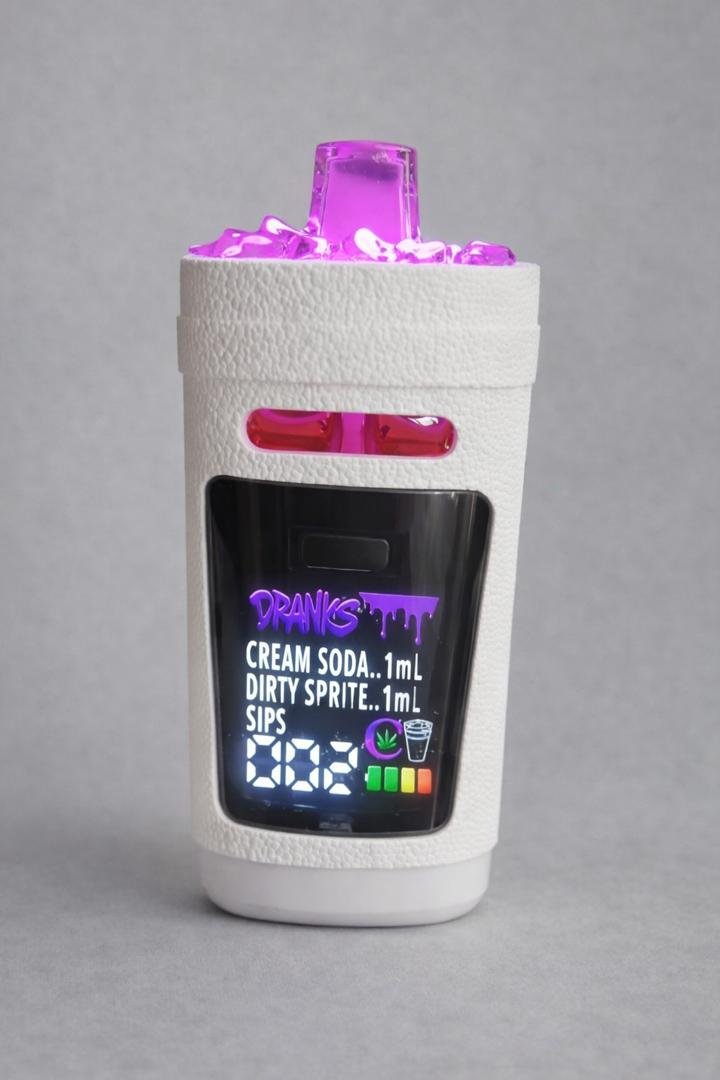


DRANKS 2G DISPOSABLE
Price range: $30.00 through $1,500.00
The Dranks 2G Disposable Vape Device introduces a streamlined approach to portable vaporizer hardware. Built around modern electronic design principles, this device integrates multiple internal systems into a single compact structure. As a result, the device combines portability, efficiency, and simplified operation within a self-contained platform.
Description
Dranks 2G Disposable Vape Device – Compact Portable Vaporizer Hardware Platform
Structural Design and Integrated Device Architecture
The Dranks 2G Disposable Vape Device is engineered around a compact architecture that integrates multiple functional systems into a single portable housing. Modern disposable vaporizers must balance performance, durability, and portability within a very small physical footprint. Because each component occupies limited internal space, engineers must carefully arrange internal systems to maintain efficient operation dranks 2g disposable.
To begin with, the device’s architecture is built around a protective outer casing that holds all internal components securely in place. This housing protects the battery, heating coil, and airflow pathways from external pressure or environmental exposure. Since disposable vaporizers are often carried in pockets or small storage compartments, structural durability remains essential.
Consequently, the outer shell provides stability during regular handling.
The housing material is selected based on its strength-to-weight ratio, which allows the device to remain lightweight while maintaining mechanical integrity. Lightweight devices improve portability and convenience during daily use dranks 2g disposable.
As a result, the Dranks 2G device maintains a compact and travel-friendly profile dranks 2g disposable.
Inside the housing, internal components are arranged using a layered internal structure that optimizes available space. Engineers typically position the battery at the lower portion of the device because this placement stabilizes the center of gravity. Balanced weight distribution helps the device feel comfortable when held.
Consequently, handling remains stable dranks 2g disposable.
Above the battery lies the electronic control circuit, which serves as the central operating system for the device. The circuit board regulates electrical flow from the battery to the heating element while also monitoring activation sensors.
Because these circuits control energy transfer, they ensure that the heating element operates within safe parameters.
As a result, device reliability improves.
The heating chamber sits in the upper section of the internal architecture. This chamber contains the resistive heating coil, which generates thermal energy when electrical current flows through it. The heating coil warms the chamber environment during activation.
Consequently, the vaporization process begins when the coil reaches the required temperature.
Another important component of the internal structure is the airflow channel system. Air intake openings allow fresh air to enter the device during inhalation. Once inside, air travels through carefully designed channels that direct airflow toward the heating chamber.
Because airflow velocity must remain balanced, these channels control how air moves through the device.
As a result, vapor mixes evenly with incoming air.
The airflow pathway continues toward the mouthpiece assembly, which forms the final stage of the vapor delivery system. The mouthpiece directs vapor outward while maintaining comfortable airflow pressure.
Consequently, inhalation remains smooth dranks 2g disposable.
Another advantage of the integrated architecture is the elimination of detachable connections. Many refillable vaporizers rely on threaded cartridge connections or removable battery modules. However, the Dranks 2G disposable device integrates all components permanently dranks 2g disposable.
As a result, mechanical connection failure becomes less likely dranks 2g disposable.
The integrated design also improves internal component alignment, which helps maintain consistent heating and airflow behavior. Because each device is assembled with precise internal positioning, performance remains uniform across production units.
Consequently, device reliability improves.
Heat management also plays an important role in the internal architecture. Heating coils generate thermal energy that must be distributed safely throughout the device structure. Engineers design the internal layout so that heat dissipates gradually through surrounding materials.
As a result, internal components remain protected from excessive temperature.
Another advantage of compact architecture is short airflow travel distance between the heating chamber and the mouthpiece. Because vapor travels only a short distance inside the device, it reaches the user quickly.
Consequently, vapor delivery feels immediate.
The integrated design also simplifies manufacturing processes, since fewer moving parts and connectors are required. Disposable vaporizer hardware typically contains fewer mechanical components than modular vaporizers.
As a result, production consistency improves.
Furthermore, the compact architecture contributes to improved device portability. Because the entire vaporization system fits within a small housing, the device remains easy to carry and store.
Consequently, portability remains one of the primary advantages of disposable vaporizer hardware.
Ultimately, the integrated architecture of the Dranks 2G Disposable Vape Device demonstrates how modern vaporizer hardware combines electronic control systems, heating technology, airflow engineering, and structural protection within a compact platform. By carefully organizing these systems inside a single housing, engineers create a device that balances efficiency, durability, and portability dranks 2g disposable.
Consequently, integrated device architecture remains a defining characteristic of contemporary disposable vaporizer design dranks 2g disposable.
Heating Technology and Vaporization Performance
The Dranks 2G Disposable Vape Device relies on a refined heating system that converts electrical energy into controlled thermal output. While the device architecture organizes the internal components and the battery provides electrical power, the heating technology ultimately determines how efficiently the vaporization process occurs. Because vapor production depends on stable temperatures, engineers design the heating system to operate with consistent thermal performance throughout the device’s lifecycle.
To begin with, the heating mechanism inside the device uses a resistive coil assembly. This coil is made from conductive materials that generate heat when electrical current flows through them. When the device activates, electricity moves from the battery through the coil. Because electrical resistance transforms energy into heat, the coil quickly reaches the temperatures required for vaporization.
As a result, the heating chamber warms rapidly.
Another important aspect of the heating system is the precision positioning of the coil within the vaporization chamber. The coil sits close to the internal reservoir so that thermal energy can transfer efficiently to the surrounding environment. Because the coil remains centered within the chamber, heat spreads evenly throughout the chamber interior.
Consequently, vaporization occurs in a stable and controlled manner.
Even heat distribution plays an important role in maintaining consistent vapor density. If certain areas of the chamber were significantly hotter than others, the vaporization process could become uneven. However, carefully designed heating elements distribute heat across the chamber surface dranks 2g disposable.
As a result, the device maintains uniform thermal conditions dranks 2g disposable.
The Dranks 2G device also incorporates electronic power regulation to control how much energy reaches the heating coil. Without regulation, the coil could receive excessive current, which might cause overheating or inefficient energy consumption. However, the internal circuit limits power delivery to appropriate levels.
Consequently, the heating element operates within a stable temperature range.
This regulated heating approach helps maintain consistent vapor production across multiple activation cycles.
Another key feature of the heating system is its rapid response time. Modern resistive coils can reach operational temperatures very quickly when electrical current flows through them. Because the coil heats almost instantly, the vaporization process begins shortly after activation.
As a result, users experience minimal delay between inhalation and vapor production.
Rapid heating improves the overall responsiveness of the device.
In addition, the heating system works together with the device’s draw-activation sensor, which triggers the heating element when airflow is detected. Instead of running continuously, the heating coil activates only during inhalation. Because the coil receives power only when necessary, battery energy is used efficiently.
Consequently, the device can support a greater number of activation cycles.
Another advantage of controlled heating technology is the reduction of thermal stress on internal components. When temperature levels remain stable, surrounding electronic parts experience less mechanical strain. Consequently, the device maintains reliable performance throughout its intended operational lifespan.
Thermal stability also improves internal component durability.
The vaporization chamber itself is designed to support efficient airflow interaction with the heated coil surface. When the user inhales through the mouthpiece, fresh air enters the chamber and passes across the heated coil. This airflow carries vapor away from the chamber and toward the mouthpiece.
As a result, vapor transport occurs smoothly dranks 2g disposable.
The interaction between airflow and heat must remain balanced. If airflow moves too quickly through the chamber, the heating element could cool prematurely. However, carefully calibrated airflow channels maintain optimal air velocity.
Consequently, the heating system can sustain consistent vaporization conditions dranks 2g disposable.
Another important element of heating performance is efficient energy transfer between the battery and the coil. Electrical pathways within the device are designed to minimize resistance. Because lower resistance reduces energy loss, more electrical power reaches the heating element dranks 2g disposable.
As a result, the heating process becomes more efficient dranks 2g disposable.
Efficiency remains especially important in disposable vaporizer hardware because the battery must support the entire operational lifespan of the device.
The heating chamber also includes thermal containment features that help maintain stable internal temperatures. These features prevent heat from dissipating too quickly into surrounding materials. Consequently, the chamber retains heat long enough to sustain vapor production.
Thermal containment improves energy efficiency.
Furthermore, the heating coil is designed to resist buildup and residue accumulation during operation. Clean heating surfaces allow heat to transfer more effectively to the surrounding chamber environment. Consequently, the device maintains stable heating performance across repeated activation cycles.
Modern coil materials support this reliability.
Another advantage of the heating system is its compatibility with compact device architecture. Because modern heating coils require relatively little electrical power, engineers can design small devices without sacrificing performance.
Consequently, the Dranks 2G vaporizer maintains its compact and portable size.
The heating system also contributes to consistent vapor density during repeated inhalation cycles. When the coil reaches stable temperatures quickly and maintains those temperatures during airflow interaction, vapor production remains predictable.
As a result, the device delivers consistent output throughout its usage cycle.
Ultimately, the heating technology of the Dranks 2G Disposable Vape Device plays a central role in its performance. Through the integration of resistive heating coils, electronic power regulation, and carefully balanced airflow interaction, the device maintains efficient thermal operation within a compact disposable platform.
Consequently, the heating system ensures that the vaporizer hardware operates reliably and efficiently during each activation cycle dranks 2g disposable.
Airflow Engineering and Draw Activation System
The Dranks 2G Disposable Vape Device incorporates a carefully engineered airflow system that supports smooth inhalation and efficient vapor transport. While the battery and heating systems generate the energy required for vaporization, airflow engineering determines how air moves through the device during operation. Because airflow affects vapor density, inhalation resistance, and overall performance, engineers design internal airflow pathways with precision. Consequently, the Dranks 2G device maintains consistent vapor delivery across repeated activation cycles.
To begin with, the airflow process starts at the air intake ports, which are positioned along the body of the device. These small openings allow fresh air to enter the vaporizer when the user inhales through the mouthpiece. Engineers carefully position these intake ports to maintain balanced airflow without introducing turbulence into the internal chamber dranks 2g disposable.
As a result, air enters the device smoothly dranks 2g disposable.
Once air passes through the intake openings, it travels through internal airflow channels that guide it toward the heating chamber. These channels are designed to maintain consistent air velocity while minimizing airflow obstruction. Because airflow moves evenly through the chamber, it interacts efficiently with the heated coil surface.
Consequently, vapor mixes uniformly with incoming air.
This balanced airflow contributes to stable vapor production.
Another important aspect of the airflow design is the calibration of draw resistance. Draw resistance refers to how easily air flows through the device during inhalation. If airflow resistance is too high, inhalation may feel restrictive. However, if resistance is too low, vapor density may become diluted.
Engineers therefore adjust airflow pathways carefully.
Consequently, the Dranks 2G device delivers a balanced draw that feels natural and comfortable.
The airflow system also supports the device’s automatic draw-activation mechanism. Instead of relying on buttons or manual switches, the device activates when it detects airflow generated by the user’s inhalation. Inside the device, a pressure-sensitive sensor monitors airflow movement within the channel.
When airflow reaches a specific threshold, the electronic circuit activates the heating element.
As a result, vaporization begins automatically.
This draw-activation system simplifies the device interface significantly. Because users do not need to operate controls or adjust settings, the device becomes easier to use. Consequently, the vaporizer provides a convenient and intuitive operation method.
Another advantage of the airflow system is its role in maintaining stable pressure levels inside the heating chamber. When air moves smoothly through the chamber, pressure remains balanced around the heating element. Balanced pressure allows the coil to maintain consistent temperatures.
Consequently, vaporization remains stable dranks 2g disposable.
Stable chamber pressure also helps prevent airflow disruptions dranks 2g disposable.
The airflow pathway continues toward the vapor transport channel, which carries the vapor-air mixture toward the mouthpiece. This channel is designed to minimize turbulence and reduce vapor condensation. Because vapor travels smoothly through the pathway, it reaches the mouthpiece efficiently.
As a result, vapor delivery remains consistent.
Another key component of the airflow system is the mouthpiece outlet, which directs vapor toward the user during inhalation. Engineers shape the mouthpiece opening to regulate airflow speed and maintain comfortable inhalation pressure. Consequently, vapor exits the device smoothly.
Comfortable inhalation improves user experience.
The airflow design also contributes to cooling the vapor slightly before it reaches the mouthpiece. As fresh air mixes with vapor inside the chamber and channels, the airflow helps regulate temperature. Consequently, vapor feels smoother during inhalation.
Temperature moderation enhances comfort.
Furthermore, the airflow system helps maintain stable internal temperatures during repeated activation cycles. When fresh air enters the chamber during inhalation, it removes a portion of the heat generated by the coil. Consequently, the device avoids excessive heat buildup.
Thermal balance improves device reliability.
Another advantage of the Dranks 2G airflow architecture is its quiet operation. Turbulent airflow can create audible noise during inhalation, which may reduce user comfort. However, smooth internal channels minimize turbulence.
As a result, the device operates quietly.
Quiet operation contributes to a more refined experience.
Airflow engineering also influences vapor concentration levels. By controlling the amount of air that mixes with vapor during inhalation, engineers can maintain balanced vapor density. Proper airflow mixing prevents vapor from becoming either too concentrated or too diluted.
Consequently, vapor quality remains stable.
Another benefit of optimized airflow channels is rapid sensor response during activation. When airflow travels predictably through the device, the pressure sensor detects inhalation quickly. As a result, the heating element activates without delay.
Fast activation improves device responsiveness.
Additionally, airflow channels are designed to occupy minimal internal space, which allows the device to maintain its compact dimensions. Efficient channel design ensures effective airflow movement without increasing the size of the device.
Consequently, portability remains a key advantage dranks 2g disposable.
The airflow system also supports efficient vapor transport between the heating chamber and mouthpiece. Because vapor travels through a relatively short pathway, it reaches the user quickly after production.
As a result, vapor freshness remains preserved dranks 2g disposable.
Another important aspect of airflow engineering is the prevention of airflow blockages during operation. Carefully shaped internal channels reduce the likelihood of condensation buildup along the pathway. Consequently, airflow remains unobstructed dranks 2g disposable.
Consistent airflow supports stable device performance.
Ultimately, the airflow engineering and draw-activation system of the Dranks 2G Disposable Vape Device play a critical role in its functionality. By combining balanced intake ports, smooth internal airflow channels, responsive activation sensors, and an ergonomic mouthpiece design, the device ensures efficient vapor transport and comfortable inhalation. Consequently, airflow engineering remains one of the most important elements of modern disposable vaporizer hardware.
Related products
-
Sale!

ZAZA 2G DISPOSABLE LIQUID DIAMONDS
Price range: $25.00 through $1,500.00Select options This product has multiple variants. The options may be chosen on the product page -
Sale!

UNI 2G DISPOSABLE 3 IN 1 DEVICE
Price range: $100.00 through $1,200.00Select options This product has multiple variants. The options may be chosen on the product page -
Sale!

LUIGI V6 2G DISPOSABLE LIVE RESIN LIQUID DIAMOND
Price range: $30.00 through $1,450.00Select options This product has multiple variants. The options may be chosen on the product page -
Sale!

WHOLE MELT V6 EXOTIC EDITION
Price range: $30.00 through $1,500.00Select options This product has multiple variants. The options may be chosen on the product page
Reviews
There are no reviews yet.