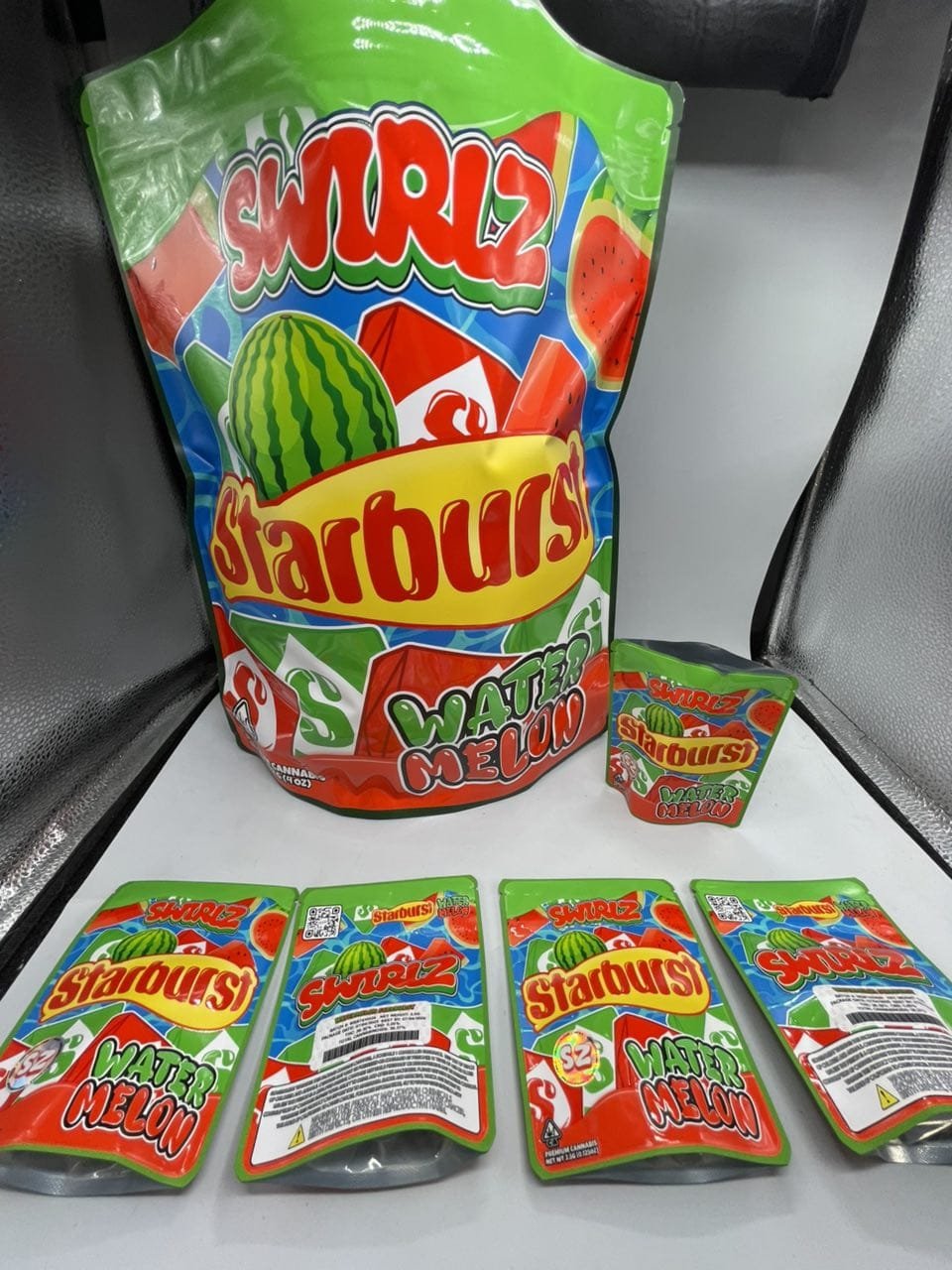
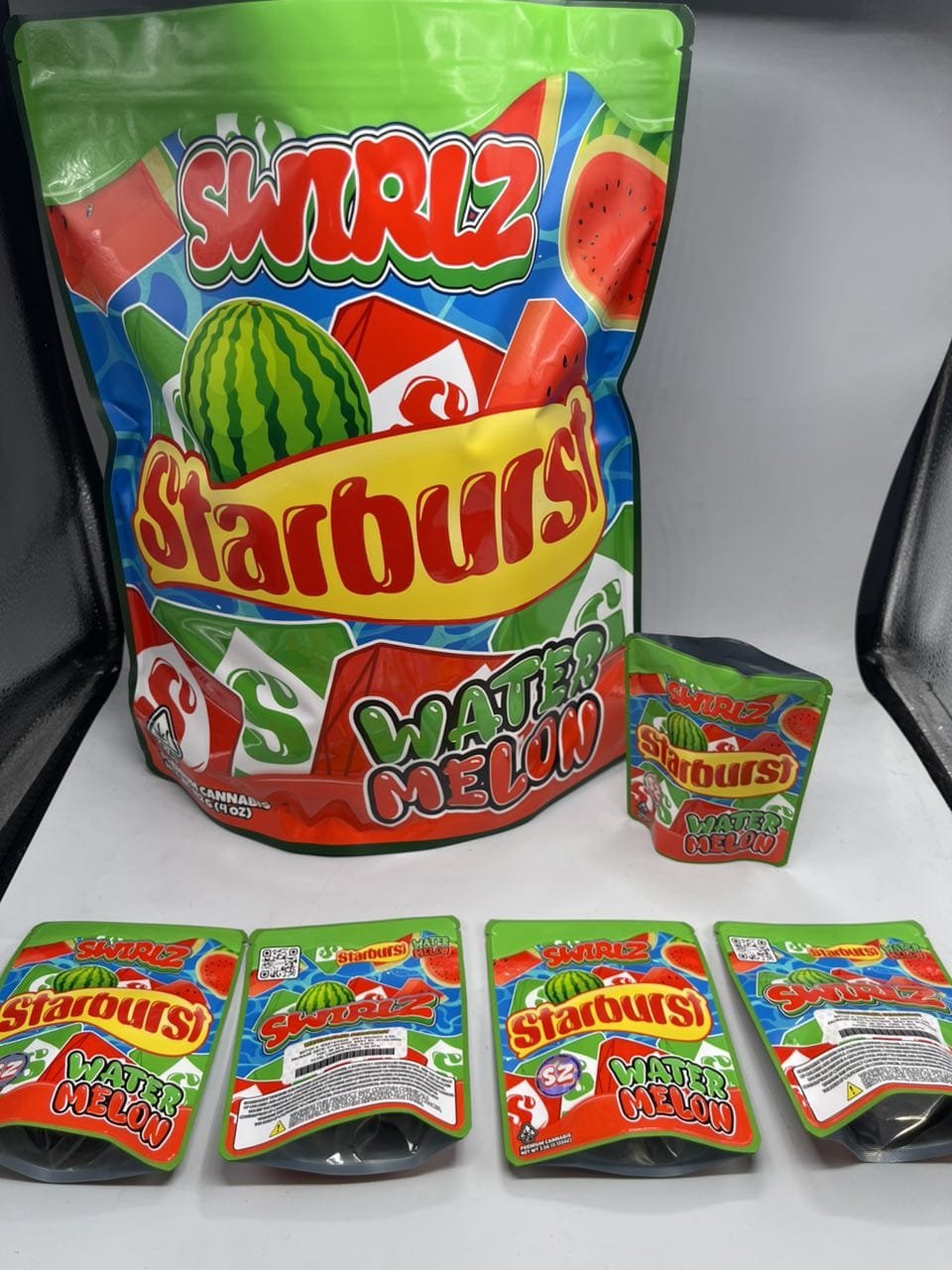
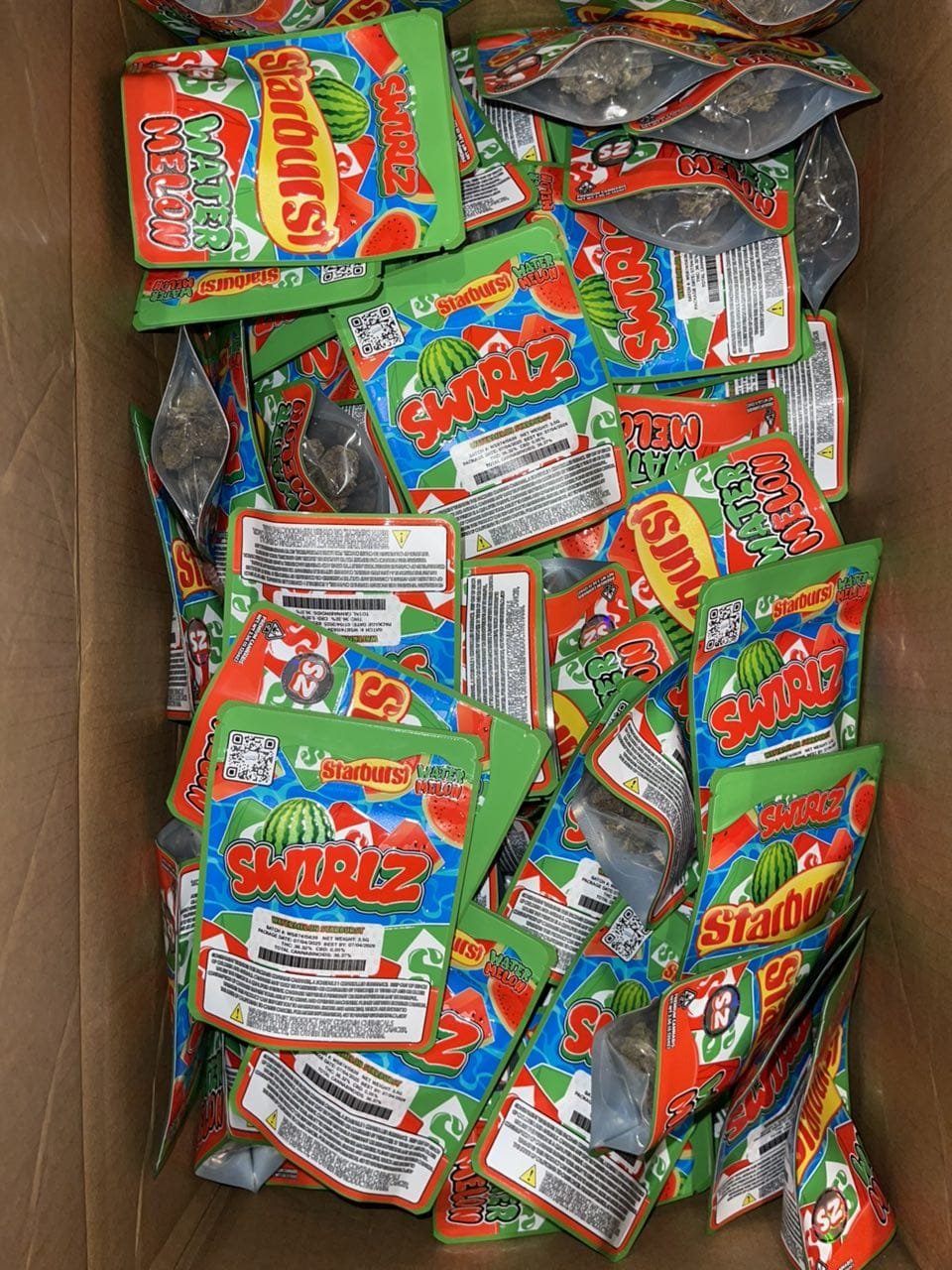
STARBURST WATERMELON PREMIUM CANNABIS BY SWIRLZ
$25.00
Starburst Watermelon Premium Cannabis by Swirlz represents a new benchmark for candy-forward flower: bright fruit aroma, controlled sweetness, and terpene clarity that survives curing, transport, and combustion without collapsing into artificial aftertaste. Built for consumers who want a dessert-adjacent cannabis experience without losing the natural character of the plant, this cultivar performs with the precision of a boutique product and the approachability of a flavor-driven strain.
Description
Juicy Watermelon Sweetness. Candy-Layer Flavor. Boutique Craft Execution.
IDENTITY, ORIGIN & FIRST-CONTACT CHARACTER
Starburst Watermelon Premium Cannabis by Swirlz exists to prove that candy-forward flower can be premium when treated with precision rather than novelty. Instead of leaning on synthetic sweetness or generic fruit aroma, this strain presents a flavor profile with shape, texture, and structural intent. The name is not a metaphor. It is a description of how the flower behaves when the jar opens, when the bud breaks, and when the first inhale hits the palate. Watermelon brightness leads the experience, candy-layer sweetness develops behind it, and a clean floral edge prevents the flavor from collapsing into syrup. This is watermelon as sensation, not a shortcut starburst watermelon cannabis.
The strain’s identity begins before combustion. As soon as the jar opens, the top layer of aroma rises clearly: juicy watermelon, candied brightness, and a sugar-glaze lift that feels vivid rather than chemical. This opening note is followed by a second layer that introduces fruit-rind depth and a touch of soft herbal coolness starburst watermelon cannabis. That secondary layer matters because it keeps the profile grounded. Without it, the strain would present as one-dimensional. With it, the strain conveys intention. The nose confirms what the name promises: candy without gimmick, sweetness without excess starburst watermelon cannabis.
First contact with the flower reinforces that impression. Buds display light green coloration with coral-tinted highlights beneath a frost of trichomes that resembles powdered sugar instead of heavy crystalline grit. The structure holds shape during handling, breaking apart with clean resistance rather than fragmenting into dust or collapsing into sponge-like compression. This physical behavior is a quality indicator starburst watermelon cannabis. It signals that moisture management, resin integrity, and curing discipline protected the terpene structure. When the flower behaves correctly in the hand, it usually behaves correctly under heat starburst watermelon cannabis.
Grinding the bud confirms the architecture. The watermelon-candy note returns immediately, stronger than before, because interior volatiles remained sealed until the moment of breakage. A soft floral brightness reappears at the edges. Then the candy impression rounds into a sweet, fruit-body middle that feels more like watermelon chew than artificial flavoring. This is a sign of correct preservation. When strains fail, the sweetness disappears at grind. When they succeed, the sweetness intensifies. Starburst Watermelon intensifies starburst watermelon cannabis.
The identity of this strain was shaped at the cultivation stage rather than repaired later. Swirlz selected phenotypes capable of maintaining candy-sweet top notes without losing the mid-body that gives the flavor weight. Many fruit-led cultivars excel at aroma but fall short in taste. They perform well in the jar and collapse during combustion starburst watermelon cannabis. Starburst Watermelon avoids that collapse through selection criteria built around terpene durability, resin architecture, and temperature stability. Each variable contributes to the profile: resin thickness protects the fruit layer; gland structure safeguards the inhale; and terpene retention ensures the flavor does not break down in the bowl starburst watermelon cannabis.
While genetics provide the blueprint, environmental choices determine whether that blueprint becomes a finished product. Starburst Watermelon is cultivated in conditions designed to support volatile flavor compounds starburst watermelon cannabis. Temperature remains consistent enough to prevent terpene evaporation spikes. Humidity is managed to defend the delicate top notes. Light scheduling prioritizes fruit-scent expression rather than bloated canopy weight. Nutrient programs focus on terpene oil development instead of yield inflation. The strain retains its sweetness because the environment protects the chemistry that creates it starburst watermelon cannabis.
From a sensory standpoint, the strain expresses its identity through a staged experience. The inhale presents the first impression: vibrant watermelon sugar with a rush that feels cold on the tongue. The mid-session expands the flavor into something rounder—sweet without stickiness, bright without thinness. Then the exhale returns control to the palate with a soft floral-fresh finish that resets the tongue for the next draw. The flavor does not linger in a heavy, syrupy film. It clears the runway for the next inhale. That detail is what separates Starburst Watermelon from standard candy strains. It behaves like confection, but it performs like craft starburst watermelon cannabis.
The emotional profile follows the same structure. The onset arrives lightly, elevating mood without destabilizing focus. It offers clarity rather than confusion. The body experience feels relaxed but not lethargic, and the mind remains available for conversation, creativity, or music starburst watermelon cannabis. This gives Starburst Watermelon range. It can function as a social strain, a session strain, a weekend uplift, or a smooth evening wind-down. Sweet strains often get trapped between too energetic and too sedating. This one creates a midpoint: comfort with capability starburst watermelon cannabis.
Shelf presence reinforces the premium identity. Buds maintain visual integrity over time rather than shrinking into dryness or flattening under transport. The coral-green coloration stays consistent, and the frost does not dull prematurely starburst watermelon cannabis. Aroma survives storage. Moisture retention remains even enough for controlled grinding, and the flower does not require perfect humidity to behave. These qualities matter for consumer confidence. When a customer opens a jar weeks after purchase and the watermelon note still rises sharply, the product earns trust starburst watermelon cannabis.
Retail environments benefit from that dependability. Sales staff can recommend the strain based on actual behavior instead of marketing language. Customers who purchase based on flavor recognition receive what they expected. Repeat buyers return because the jar they open matches the jar they remember. That alignment generates loyalty, and loyalty generates movement. Starburst Watermelon enters the market as a flavor strain, but it stays in the market as a performance strain.
Connoisseurs evaluate the flower differently. They inspect structure. They test how the trichomes respond to pressure. They judge whether the sweetness is a shell or a foundation. They pay attention to how the profile holds at low temperatures, moderate temperatures, and higher temperatures. They check whether the strain tastes like watermelon in the rig or only in the jar. Starburst Watermelon passes those checks because the sweetness is integrated, not sprayed on. It is present in the resin, not projected by packaging. It shows up when heat is applied, not when fantasy is applied.
This is where the identity of the strain becomes clear:
Starburst Watermelon is not a flavor pretending to be cannabis; it is cannabis expressing itself through flavor.
TERPENE ENGINEERING, FLAVOR STRUCTURE & SENSORY SEQUENCING
Starburst Watermelon Premium Cannabis by Swirlz defines its sensory identity through intentional terpene architecture, not marketing suggestion. The strain behaves like its name because the underlying terpene stack supports each stage of the flavor: aroma lift, candy-sweet body, and clean exhale. While many candy-forward cultivars collapse into over-sweetness or artificial tones, this one maintains composure through sequencing. Each terpene contributes a function, not just a note. This is why the profile feels engineered rather than improvised.
At the top of the structure sits limonene, responsible for the sugar-bright opening impression. It activates as soon as the jar is cracked, releasing that first rush of watermelon candy scent. Instead of leaning into citrus, limonene in this phenotype bends toward a cool sweetness—sharp enough to announce itself and light enough to avoid overwhelming the profile. Because of this, the opening inhale feels like a watermelon candy shell, not a fruit spray or perfume. Limonene sets the temperature of the experience: cool, sweet, and clean.
Layered beneath that top note is linalool, which shapes the mid-session. It provides a soft floral edge that keeps the sweetness from turning syrupy. When linalool is present in the correct proportion, the candy effect becomes dimensional rather than flat. Here, it acts like the cooling finish of chilled fruit, the sensation that keeps the palate refreshed instead of coated. As a result, Starburst Watermelon never settles into heaviness. It remains bright, even when the session progresses.
Below that floral lift sits myrcene, responsible for the strain’s plush mouthfeel. In many profiles, myrcene leans sedative or earthy, yet here it behaves differently. It adds body to the watermelon profile without pulling it downward. It rounds the edges of the sweetness, producing a candy-chew texture on the inhale. This mid-layer functions like the gummy structure beneath the candy shell: soft, full, and slightly dense. Without myrcene, the profile would taste thin. With it, the profile carries weight.
Supporting the foundation is beta-caryophyllene, the stabilizer. It prevents the candy-watermelon identity from sliding into artificiality by introducing a herbal anchor. When heat interacts with this terpene, it gives the flavor a finish rather than a fade. It ensures that the exhale feels like a step down, not a drop off. This is why the session closes cleanly. The sweetness resolves, the palate resets, and the next inhale begins at zero rather than ten. That reset is what makes Starburst Watermelon usable in longer sessions without flavor fatigue.
Together, these four components build a flavor sequence:
1. Open — Watermelon Candy Shell
A sharp, bright top note hits instantly, recognizable as watermelon sweetness rather than generic fruit. It behaves like a first bite.
2. Develop — Juicy Mid-Body
Floral-candy tone blends with the gummy-sweet center. The inhale thickens slightly, as though flavor is becoming texture.
3. Resolve — Clean Floral Finish
The session ends with a cool finish, clearing the palate so the sweetness doesn’t linger like syrup.
4. Reset — Ready for the Next Draw
The next inhale tastes new. The profile doesn’t stack or muddy. This is rare in candy strains.
This progression makes Starburst Watermelon a sensory narrative instead of a static flavor. Many fruit-forward strains spike at the start and fade immediately. This one moves. It carries direction. It has plot, beginning, middle, end, and re-entry. Connoisseurs notice that structure. Casual users simply describe it as “tasting like the name.” Both are correct.
The strain’s grind profile reinforces the terpene logic. When the buds break open, the aroma refreshes instead of dissipating. This indicates terpene retention and correct moisture balance. If the flower were cured poorly or stored carelessly, the grind would reveal grassiness, hay, or staleness. Instead, it releases a second burst of candy-sweet watermelon and floral chill. That renewal confirms that the preservation stages—cool-chain handling, stabilized curing, and controlled humidity—maintained integrity. The identity survived transport. It survived packaging. It survived time.
Heat behavior provides the final proof. Starburst Watermelon performs at low, medium, and higher temps without losing definition. At low temperature, the inhale presents like a watermelon hard candy with floral chill. At medium temperature, the candy-chew texture becomes more noticeable, with sweetness expanding across the palate. At higher temperature, the sweetness bends but does not burn. It doesn’t collapse into bitterness. It doesn’t degrade into a burnt-fruit illusion. The structure adapts.
This temperature versatility matters because it widens the user base. New consumers with entry-level devices still receive the intended flavor. Experienced users with calibrated setups can isolate layers. Connoisseurs running quartz, ceramics, or precision-controlled vapes can explore the profile rather than fight it. When a strain behaves correctly across equipment types, it transitions from novelty to category leader.
The emotional component follows the same sequence as the flavor. The first few inhales bring brightness—light, social, upbeat. Then the body eases into comfort, not sedation. The end of the session lands like a soft landing rather than a crash. This effect structure supports conversation, music, creative pacing, relaxed recreation, and late-afternoon transition. The strain doesn’t demand a context. It adapts to it. That flexibility makes it commercially valuable Starburst Watermelon strain.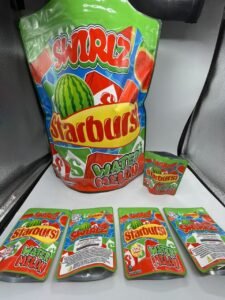
Retail environments benefit from that predictability. Customers who buy it for the name are rewarded by flavor accuracy. Customers who return for performance are rewarded by consistency. Sales staff can describe it honestly, and those descriptions match what the customer receives. That alignment creates repeat revenue, brand trust, and SKU stability. It places Starburst Watermelon in a category above novelty strains: the functional flavor class starburst watermelon cannabis.
Connoisseurs evaluate it through a different lens—checking the fracture of the bud, the integrity of the trichomes, the clarity of the sweetness under heat starburst watermelon cannabis. They want proof, not promise. Starburst Watermelon provides that proof starburst watermelon cannabis. The candy isn’t sprayed on; it’s built in. The fruit note isn’t cosmetic; it’s structural starburst watermelon cannabis. The name isn’t wishful; it’s accurate starburst watermelon cannabis.
CULTIVATION DISCIPLINE, PRESERVATION LOGIC & CURING ARCHITECTURE starburst watermelon cannabis Starburst Watermelon weed
Starburst Watermelon Premium Cannabis by Swirlz succeeds because its quality is engineered before the jar ever opens. Most candy-leaning strains fall apart after growth: sweetness evaporates, watermelon collapses into generic fruit, and the profile that smelled promising in the grow room fails to translate into smoke. Swirlz built a methodology that prevents that breakdown. Instead of hoping flavor survives, the process ensures that flavor survives starburst watermelon cannabis.
Cultivation begins with selective phenotype discipline, not blanket production. Dozens of phenotypes are evaluated for their ability to hold watermelon identity through turbulence—heat shifts, humidity drift, curing compression, and oxygen exposure starburst watermelon cannabis. The chosen cut is the one that retains sweetness under pressure, preserves floral chill, and carries the candy-shell opening note across every stage of handling. This selection logic prioritizes terpene durability, not hype starburst watermelon cannabis. Many strains smell like watermelon once; Starburst Watermelon smells like watermelon repeatedly starburst watermelon cannabis.
Growing conditions support that outcome. Lighting schedules are designed to coax volatile compounds—limonene brightness, linalool coolness, and the plush chew of myrcene—without forcing uncontrolled stretch. Nutrients are calibrated for terpene expression, not bloated yield. When growers chase weight at the expense of oil development, candy strains lose definition. Swirlz refuses that trade. The goal is not simply to produce flower; it is to produce flower that behaves like Starburst Watermelon should behave.
Environmental balance plays a critical role. Temperature control prevents the top layer of sweetness from burning off during late flower. Humidity stabilization keeps resin glands intact, so the powdered-candy dusting reads as structure instead of residue. Airflow supports microclimate consistency, carrying floral aroma through the canopy rather than trapping moisture pockets that can degrade the grape-melon edge. When the environment respects the terpene stack, the strain retains identity from stem to jar Starburst Watermelon strain.
Harvest timing finalizes the foundation. In fruit-driven genetics, cutting too early produces sharpness without body. Cutting too late produces syrup without clarity. Starburst Watermelon meets harvest when the sugar-shell note is present, the candy-chew mid-layer has developed, and the floral finish has formed—without turning perfumed or medicinal. This precision captures the profile at peak character rather than waiting for decay to begin. The plants are not harvested because the calendar says so; they are harvested because the terpene geometry is correct.
Once removed from the plant, the flower enters preservation staging. This is the most fragile moment. If the chain breaks here, the entire strain fails. Swirlz controls temperature, humidity, and oxygen from the second the branches leave the canopy. Cold-channel handling prevents terpene shock; low-impact transfer avoids rupturing trichomes; measured humidity prevents the dreaded “hay flip” that erases fruitiness. Many candy strains smell amazing until they hit the dry room; Starburst Watermelon still smells like watermelon after it leaves it.
Curing proves whether the strain is premium or pretending. Standard curing trades sweetness for stability, and most fruit strains accept that trade because the process is not built for them. Swirlz cures Starburst Watermelon like a perishable craft good. Moisture releases gradually instead of dumping. Internal humidity equalizes rather than swinging. Air exchange is controlled rather than improvised. The result is a bud that retains shape, retains scent, and retains the staged flavor progression that defines the strain Starburst Watermelon weed.
Structural integrity reveals itself long before combustion. Buds hold their coral-green coloration instead of dulling into beige. The powdered-candy frost stays upright rather than melting into wet crystal. Break points feel clean; grind points release aroma; moisture content remains even. The flower does not fall apart in the grinder or tighten into rubbery compression. It behaves like something built, not something rushed.
Combustion performance confirms the decisions behind it. At low temperature, watermelon shell appears first. At medium temperature, candy-chew warmth surfaces. At higher temperature, floral clarity keeps the sweetness from scorching starburst watermelon cannabis. Because resin architecture survived the curing stage, the strain performs across devices rather than requiring a perfect setup to taste like itself starburst watermelon cannabis. This is why the profile holds at 450°F, 525°F, and 575°F instead of vanishing outside a narrow window starburst watermelon cannabis.
Storage stability separates Starburst Watermelon from its peers. Many candy-sweet strains degrade rapidly, losing 60–80% of their top notes within weeks on retail shelves starburst watermelon cannabis. This cultivar resists that collapse because the curing, moisture, and container logic are built for longevity. Oxygen exposure is minimized. Light contamination is prevented. Temperature fluctuation is buffered. The jar does not simply hold flower; it protects flavor. This is why customers who reopen the jar days or weeks later experience the same watermelon rush instead of a tired approximation starburst watermelon cannabis.
Retail environments rely on that reliability. Flavor-name strains sell on recognition, but they resell on accuracy. When a customer returns to a dispensary and asks for the strain that “actually tasted like watermelon,” the product becomes a revenue anchor. Budtenders do not need to exaggerate; they can describe the strain honestly. Managers can stock it confidently because it does not degrade at the rate most candy strains do. Inventory can rotate without fear that the flavor window closes before it sells.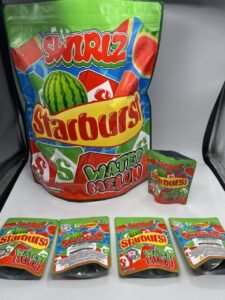
Connoisseurs judge by different criteria: trichome integrity, fracture behavior, airflow resistance, and temperature response. Starburst Watermelon meets those criteria. The sweetness is resin-based, not illusion-based. The aroma comes from oil structure, not packaging suggestion. The flavor survives heat because the compounds that create it remained intact. Those details separate a premium experience from a performative one.
Related products
-
Sale!
TREATZ 1.5G JOINT
Price range: $12.00 through $1,000.00Select options This product has multiple variants. The options may be chosen on the product page -
Sale!
GLO WOPPERS CANNABIS WITH GUMMIES
Price range: $200.00 through $1,250.00Select options This product has multiple variants. The options may be chosen on the product page -
Sale!

ARCADIA SNOWCAPS ORIGINAL EDITION
Price range: $150.00 through $2,250.00Select options This product has multiple variants. The options may be chosen on the product page -
Sale!

TEDS BUDS 8THS CANNABIS FLOWER
Price range: $50.00 through $300.00Select options This product has multiple variants. The options may be chosen on the product page
Reviews
There are no reviews yet.